Building a Creative Community Through Email: How Arts & Crafts Brands Turn Buyers Into Advocates
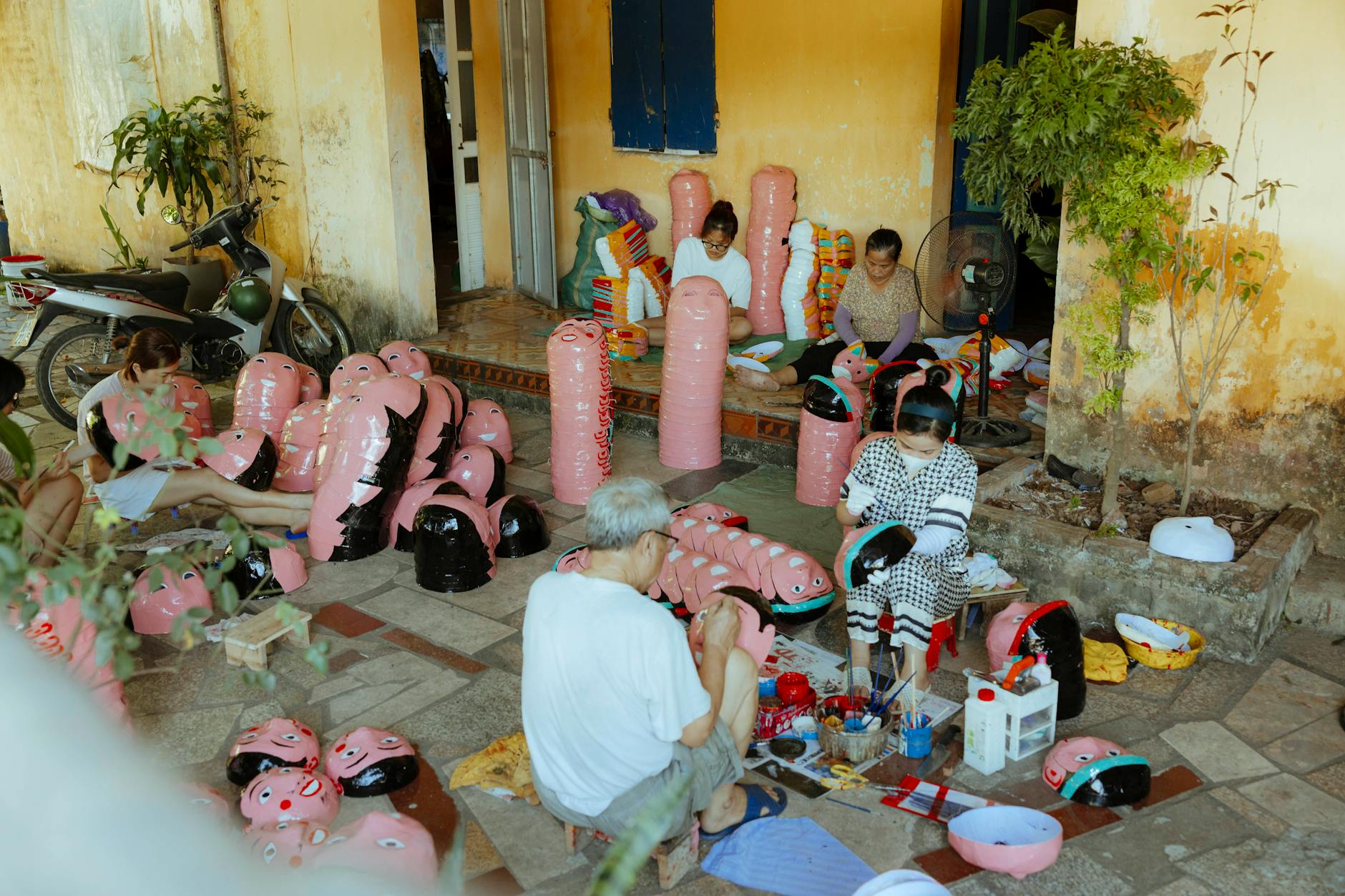
The most powerful arts and crafts brands are not just suppliers. They are communities. They are the place where crafters find not only the supplies they need but also the inspiration, the connection, and the recognition that keeps the creative practice alive.
Community-building sounds like a brand strategy buzzword, but in the craft space it is also a direct revenue driver. Customers who feel connected to a brand’s community buy more frequently, spend more per order, and refer more friends. They leave reviews unprompted. They share their projects on social media and tag the brand. They become walking marketing assets.
The challenge is that most brands try to build community through social media, where algorithm changes, reach limitations, and platform competition constantly undermine their efforts. Email is the far superior channel for community building in the craft space — because it is direct, it is personal, and it arrives in a space the subscriber has designated for things they care about.
Here is how to build a genuine creative community through email that turns buyers into advocates.
What Community-Building Emails Actually Are
Before diving into tactics, it is worth clarifying what community-building emails are and what they are not.
They are not:
- A newsletter full of product announcements dressed up as community content
- A once-a-month roundup of blog posts with a “stay inspired” tagline
- A customer review showcase that is really just social proof for a sales email
They are:
- Content that features and celebrates your actual customers and their creative work
- Structured engagement programs that invite participation and recognize contributors
- Genuine stories that connect the people in your community to each other and to the brand
- Content that a subscriber would forward to a creative friend because it is genuinely interesting or moving
The distinction matters because subscribers can tell the difference instantly. When an email feels genuinely community-focused — when it celebrates a real maker, shares a real story, or invites real participation — it creates a completely different emotional response than a promotional email with a thin community veneer.
The Customer Creation Spotlight Email
The single most powerful community-building email format for craft brands is the customer project spotlight. This is an email that features a real customer’s finished project — their photo, their story, and their experience using your products — as the main content.
Why Customer Spotlights Work
Customer spotlights accomplish several things simultaneously:
- They recognize and reward the featured customer — a deeply human need for acknowledgment that creates lasting brand loyalty in the person featured
- They inspire other subscribers — seeing real projects made by real people is more motivating than seeing professional product photography
- They provide authentic social proof — which is more persuasive than brand-generated claims
- They generate UGC submissions — once subscribers see that their work might be featured, they start sending in their projects
- They drive product sales — the materials list under a customer spotlight converts extremely well because the subscriber can see exactly what a real person achieved with those products
How to Structure a Customer Spotlight Email
Subject line examples:
- “Meet Sarah — and the quilt she made for her daughter.”
- “This week’s maker: Rachel’s stunning embroidery wall piece.”
- “Community spotlight: the macramé mirror that stopped our scroll.”
What to include:
- A brief introduction to the featured maker — their name, where they are from, how long they have been crafting
- Their project story — what inspired the project, who it was made for, any challenges they encountered
- Their photo of the finished piece (their photo, not a professional shoot)
- A quote from the maker about their experience
- The materials they used, linked directly to your product pages
- An invitation for other subscribers to submit their own projects
The submission call-to-action:
Every spotlight email should end with a clear invitation: “Want to be featured? Send us a photo of your latest project at [email address] with a few words about your creation.” This seeds the pipeline for future spotlights and makes every subscriber feel like potential recognition is one project away.
Spotlight Frequency and Format Variations
A weekly or biweekly spotlight cadence is sustainable for most brands. You can also vary the format:
- Single maker deep-dive — one customer, their full story, three to five project photos
- Community gallery — five to eight customers featured briefly with a single image and one-line caption each
- Before-and-after project reveal — a maker shares the process and finished result
- Maker interview — three to five questions answered by a community member, with photos
The Creative Challenge Campaign
A creative challenge is a structured program that invites subscribers to make a specific project (or a variation on a theme), share their result, and be eligible for a prize or featured spotlight. Done well, challenges generate enormous engagement, flood your inbox and social media with UGC, and create a sense of collective creative momentum.
Challenge Email Sequence
A successful challenge runs over three to four weeks and follows a sequence:
Email 1 — The Challenge Announcement (Week 1):
- Introduce the challenge theme (e.g., “The Spring Botanical Challenge” — create anything inspired by spring botanicals)
- Specify the entry method (email submission, social media tag, or both)
- Reveal the prize and featured spotlight incentive
- Link to a starter tutorial or inspiration gallery
Subject line examples:
- “We’re starting a challenge — and we want you in.”
- “The Spring Botanical Challenge starts now.”
- “Your creative challenge brief is inside.”
Email 2 — The Midpoint Reminder (Week 2):
- Share early entries received (with permission) to build excitement and show community participation
- A “you still have time” encouragement for subscribers who haven’t entered yet
- Additional inspiration or a technique tip relevant to the challenge theme
Subject line examples:
- “Look what your fellow crafters are making.”
- “Challenge update: the entries are coming in (and they’re incredible).”
- “You have one week left — here are some ideas to get started.”
Email 3 — The Winner Announcement (Week 3-4):
- Feature the winning entry with full maker story
- Share a gallery of other notable entries
- Thank all participants
- Announce the next challenge or invite subscribers to share projects ongoing
Subject line examples:
- “And the Spring Botanical Challenge winner is…”
- “The results are in — meet our community’s most creative makers.”
- “Challenge winner announced + a sneak peek at what’s next.”
Challenge Mechanics That Drive Participation
- Low barrier to entry — challenges that require complex techniques or expensive supplies get low participation; accessible themes (“anything with our new ink range”) get high participation
- Multiple winners — feature a “Judges’ Pick,” a “Most Creative Use of Color,” and a “Community Favorite” voted by email subscribers; this dramatically increases the number of people who participate and the number who share their entry publicly to gather votes
- Clear submission method — make it easy to enter; friction kills challenge participation
- Visible community participation — share entries in real-time on social media and in mid-challenge email updates so participants can see that others are playing
The Maker Story Feature
The maker story is a longer-form email that goes deeper than a spotlight — it is a genuine profile of an interesting person in your community. A maker who has built a business from the craft, a hobbyist with an extraordinary story, a teacher using craft in a meaningful context, or a maker who has navigated a personal challenge through their creative practice.
These emails are the editorial heart of a community newsletter strategy. They are not about selling supplies at all — they are about honoring the culture of making.
Subject line examples:
- “How knitting helped Miriam through the hardest year of her life.”
- “She turned a weekend craft hobby into a six-figure ceramics business.”
- “Meet David: the 72-year-old who took up embroidery last year.”
A strong maker story email will have the highest forward rate and the lowest unsubscribe rate of anything in your email program. It is the kind of content that makes subscribers feel they are part of something worth being part of.
What makes a compelling maker story:
- A genuine hook — there is something surprising, moving, or remarkable about this person’s relationship with their craft
- Specificity — real details, real places, real challenges make a story feel true
- A craft-related turning point — a moment where making something changed something
- A closing that connects back to the broader community — “This is the kind of story that reminds us why we do what we do”
The Community Newsletter Strategy
All of the above elements — spotlights, challenge updates, maker stories — can be organized into a regular community newsletter that becomes a subscriber’s primary reason to stay on your list.
Community Newsletter Architecture
A bi-weekly community newsletter might include:
- Lead feature: A customer spotlight or maker story (the main content)
- Creative inspiration: Two or three project ideas from the community (subscriber submissions)
- From the studio: A brief note from your team — what you are working on, what is coming next
- Challenge update: Current challenge entries or announcement of next challenge
- Supplies that are getting used: A soft product feature that connects naturally to the lead content (“Here are the exact supplies Sarah used to make her quilt”)
- Community question: A discussion prompt that invites reply-to-email engagement
Naming the Newsletter
Give the newsletter a name that embodies the community identity:
- “The Studio” — for a brand with a premium, editorial aesthetic
- “The Maker’s Corner” — warm, inclusive, community-focused
- “Create Together” — emphasizes the collective nature of the community
- “The Workshop” — practical, project-focused, hands-on brand feel
A named newsletter with a consistent identity becomes something subscribers subscribe to in its own right — distinct from promotional emails and more enduring than any single campaign.
Measuring Community Email Performance
Community-building emails measure differently from promotional campaigns. Track:
- Forward rate — the percentage of recipients who forward the email to someone else (a direct community health metric)
- Reply rate — how many subscribers reply to community emails (indicates genuine engagement quality)
- UGC submission rate — how many subscribers submit projects after being invited to do so
- Challenge participation rate — percentage of subscribers who enter challenge campaigns
- Unsubscribe rate vs. promotional emails — community emails should have significantly lower unsubscribe rates
- Revenue lift for featured products — the increase in sales for products featured in spotlight emails versus baseline
Long-term, the community email program reveals itself in subscriber lifetime value. Brands that invest in community newsletter strategy consistently see higher LTV among subscribers who engage with community content versus those who only receive promotional emails.
Want to build a creative community email program for your arts and crafts brand? Excelohunt designs done-for-you community email programs that turn your buyer list into an engaged creative tribe — and a recurring revenue engine.
Get your free email audit at excelohunt.com/free-audit and find out how a community-first email strategy could transform your brand’s relationship with its customers.
Related Excelohunt Services
Looking to implement these strategies with expert support?
- Email Campaigns — learn how we implement this for clients
More in Strategy
- Best Email Marketing Agencies for Small DTC Brands ($40k+/mo)
- Best Email & SMS Marketing Agencies for Ecommerce (2026)
- Chronos Agency Alternatives for $40k–$500k/mo DTC Brands
- Chronos Agency Pricing Explained: Is the $10k Minimum Worth It?
- Chronos Agency vs InboxArmy: Which Is Better for DTC Email?