The Electronics Upgrade Cycle Email: How to Convert Existing Customers When New Models Launch
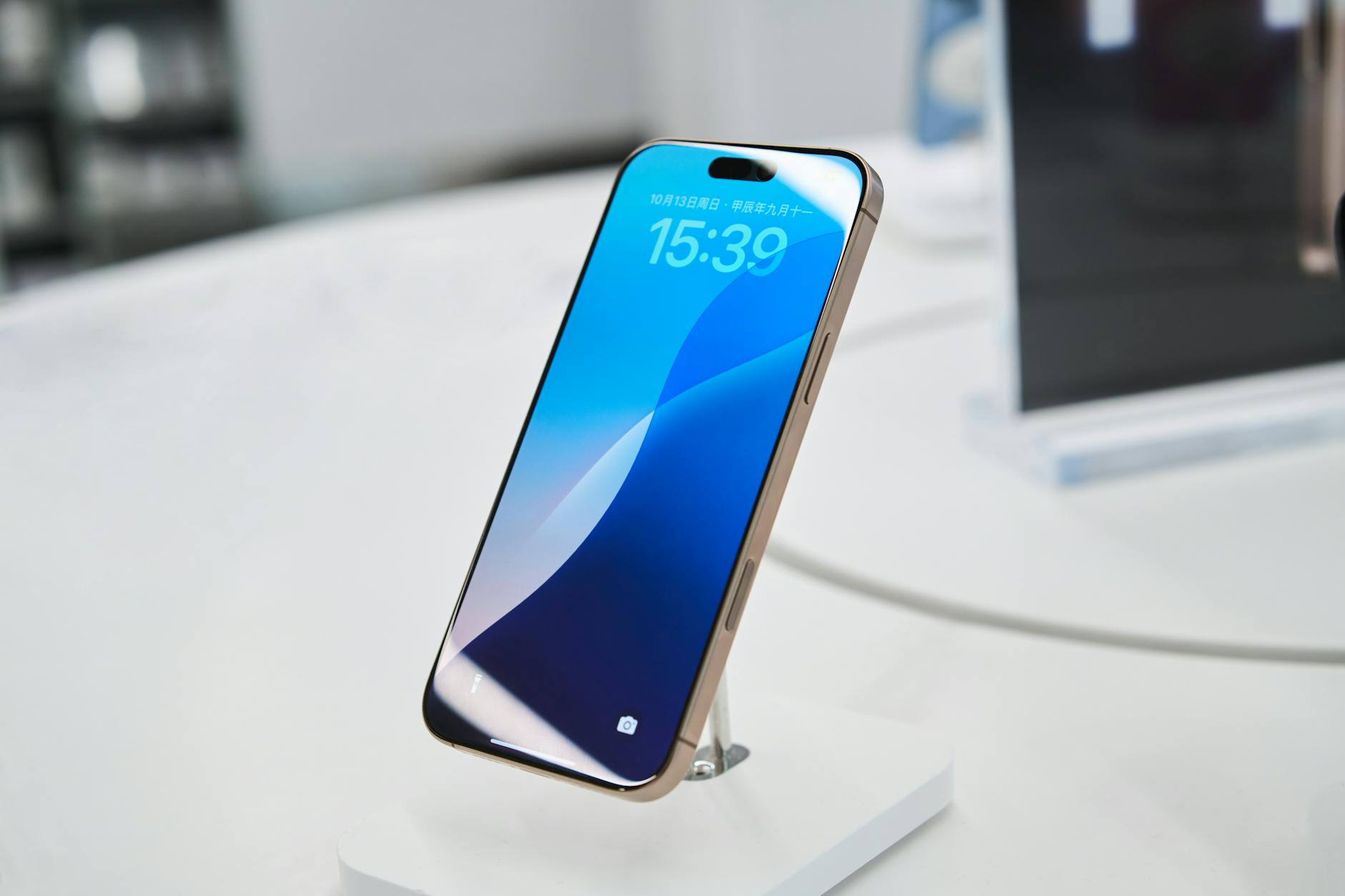
The most valuable customer you have is the one who already bought from you. They know your brand. They’ve experienced your product. They have a formed opinion of your quality. When a new model launches, they’re 3–5x more likely to purchase than a first-time visitor—if you reach them with the right message at the right time.
Most electronics brands treat upgrade marketing as an afterthought. A product launch email goes to the full list, existing customers see it alongside everyone else, and the conversion rate looks the same. But a segmented, personalized upgrade campaign—built around what the customer already owns and when they’re likely to be in the market—consistently generates 2–4x the conversion rate of a generic launch announcement.
This is the complete playbook for electronics upgrade cycle email marketing.
Understanding the Upgrade Psychology
Electronics customers upgrade for one of four reasons. Understanding which reason applies to which customer segment determines how you should communicate.
Reason 1: Feature gap. “The new model has a feature I’ve wanted and my current one doesn’t have it.” These customers are already sold. They just need to know the feature exists.
Reason 2: Performance degradation. “My current device is getting old, slowing down, or the battery doesn’t last anymore.” These customers need a nudge and a reminder that their problem has a solution.
Reason 3: Economic trigger. “My current device has trade-in value now. If I don’t trade it in soon, that value drops.” These customers are motivated by financial logic—not just feature desire.
Reason 4: Identity and status. “I always get the latest [product].” For premium electronics brands, this segment is real and valuable. They buy because being current matters to them.
Your upgrade email campaigns should be built around each of these motivations, not a single generic message.
Building Your Upgrade Eligibility Segments
The foundation of upgrade campaign performance is knowing what your customers currently own and when they bought it. This data should live in your CRM and sync with your email platform (Klaviyo, Attentive, or equivalent).
Segment Configuration
Tier 1: Prime Upgrade Candidates (Highest Priority)
- Purchased the previous model 18–36 months ago
- Purchase history shows single-device buyer (not a frequent upgrader)
- Has opened at least 2 emails in the past 90 days
These customers own the device that most directly precedes your new launch, have used it long enough to appreciate the new features, and are currently engaged with your brand communications. They are the highest-converting upgrade segment.
Tier 2: Early Upgrade Candidates
- Purchased any model 12–18 months ago
- High engagement score (frequent email opener and clicker)
- Has purchased accessories, suggesting high product investment
Shorter ownership tenure means a slightly harder case for upgrading, but high engagement and accessory purchases signal deep product attachment—and these customers often respond well to exclusive early access or trade-in incentive offers.
Tier 3: Long-Tenure Owners
- Purchased any model 36+ months ago
- Low recent engagement
- No recent purchase activity
These customers may have drifted. A strong upgrade campaign with a compelling new feature story and a time-limited trade-in offer can re-engage this segment. Open rates will be lower, but purchasers from this segment often have high LTV because they’ve proven long-term brand loyalty.
Tier 4: Multi-Device Buyers
- Purchased multiple products from your catalog
- May already own the newest model in one category but older models in others
- High AOV history
For these customers, the upgrade message should be cross-category: “You upgraded your [Product A] and loved the experience. Here’s what’s new in [Product B].”
The Upgrade Announcement Email
The first email in your upgrade campaign is the most important. It needs to answer the primary question every existing customer asks: “Is this worth switching from what I have?”
Subject Line Strategies by Segment
For previous-model owners:
- “[Product Name Gen 3] is here — here’s what’s different from your [Gen 2]”
- “Your [Product Name] just got a worthy successor”
- “[First Name], this is why we think you’ll want to upgrade”
For long-tenure owners:
- “It’s been [X] years — a lot has changed in [product category]”
- “Your [Product Name] has been great. The new one is something else”
For high-engagement customers:
- “First look: [New Product Name] — you saw it here before anyone else”
Email Structure: The “What Changed” Focus
The upgrade announcement email should not be a general product launch email. It should be specifically structured around the comparison between what the customer has and what’s new.
Header: Product name and launch statement
Section 1: What’s new vs. what you have
A simple side-by-side table or bullet comparison: “If you own [Previous Model], here’s what you gain with [New Model]“
| Feature | [Previous Model] | [New Model] |
|---|---|---|
| Battery life | 20 hours | 34 hours |
| Processor | [Gen X chip] | [Gen Y chip] — 40% faster |
| Noise cancellation | Standard ANC | Adaptive ANC with [feature] |
| New feature | Not available | [Key new capability] |
This format is the single most effective element in upgrade emails. It eliminates the comparison work the customer would otherwise do themselves—and presents it with your framing.
Section 2: The upgrade story
Two to three sentences describing the customer archetype who should upgrade: “If you use your [Product Name] for [high-use scenario] and have noticed [common pain point], the [New Model] was specifically designed to address that.”
Section 3: CTA and next step
Clear CTA to learn more or purchase. If a trade-in program exists, introduce it here: “Your [Previous Model] is worth up to $[X] in trade-in credit.”
Trade-In Offer Email Campaigns
Trade-in programs are one of the most effective upgrade acceleration tools for electronics brands. They create an economic trigger, reduce the net cost of upgrading, and create a time-sensitive reason to act.
Trade-In Value Announcement Email
Subject line: “Your [Product Name] is worth [estimated value] — here’s how to use it toward the new one”
Content structure:
- Acknowledge what they own and how long they’ve had it
- Present the trade-in value clearly: “Based on the model you purchased, your device qualifies for up to $[X] in trade-in credit toward [New Model]”
- Explain the process in 3 steps: request trade-in value, ship your old device (or bring it in), receive credit toward your new purchase
- Time-limit the offer: “Trade-in values are highest within the first 60 days of [New Model]‘s launch”
Make the economics undeniable. If the new model costs $299 and the trade-in credit is $75, the net cost is $224. Show that math explicitly.
Trade-In Value Countdown Emails
Trade-in value naturally decreases over time as devices age. Use this in your email sequence to create legitimate urgency:
Email: 30 days after launch
Subject: “[First Name], your trade-in offer expires in 30 days” Body: Brief reminder of the offer, current trade-in value, and a link to initiate the trade-in.
Email: 7 days before offer expires
Subject: “Trade-in credit for your [Product Name] drops in 7 days” Body: Final push. Show the current value vs. the value they’ll receive after the deadline. Make it a concrete number comparison.
The New Feature Deep-Dive Email
Not every upgrade-eligible customer will be moved by the comparison table. Some need to understand a specific feature before they’ll pull the trigger. The feature deep-dive email goes one level deeper.
Subject line: “What [New Feature] actually does — and why it matters for [use case]”
This email picks the single most compelling new feature and explains it in detail:
- What it is (in plain language, not spec-speak)
- How it works in practice
- What problem it solves that the old model didn’t
- A real-world example or short video demonstration
Feature deep-dive emails work especially well for tech-savvy customer segments who do their own research and want the information before buying. They also make excellent content for re-engagement sequences with customers who opened the launch email but didn’t click through.
Segmenting By Purchase Timing: The Anniversary Upgrade Campaign
One of the most underused tactics in electronics upgrade marketing is the purchase anniversary campaign. You know exactly when each customer bought their device. Use that date.
12-Month Anniversary Email:
Subject: “1 year with [Product Name] — here’s what’s new in the lineup”
Frame this as a milestone check-in: “A year ago you bought [Product Name]. Here’s what we’ve added to the [product line] since then.” This email is low-pressure and high-relevance—it celebrates ownership duration while naturally introducing what’s new.
24-Month Anniversary Email:
Subject: “2 years in — is it time for an upgrade?”
More direct framing. Acknowledge two years of ownership, note that a new generation has launched, and present the trade-in offer. Two-year ownership is a natural upgrade decision point for many electronics categories.
36-Month Anniversary Email:
Subject: “[First Name], your [Product Name] has done its job. Here’s what’s next.”
This is your strongest upgrade push. Three years is beyond the typical replacement cycle for most consumer electronics. Acknowledge the longevity, celebrate it, and make the case for why now is the right time to step up to the current generation.
Upgrade Email Metrics and Optimization
Upgrade campaigns require distinct benchmarks from general campaign performance:
- Upgrade conversion rate: Percentage of the upgrade-eligible segment that purchases within 30 days of the campaign
- Trade-in attachment rate: Percentage of new model purchasers who used the trade-in program (a proxy for how compelling your trade-in offer is)
- Segment performance comparison: Which ownership-age segment converts at the highest rate? This tells you where to focus acquisition efforts (acquire customers who are most likely to upgrade when the next cycle arrives)
- Feature email click-through rate by segment: Which feature story resonates most with which customer type? Optimize future product development communication based on this data
Electronics brands with the best upgrade cycle metrics share one practice: they know exactly who their customers are, what they own, and when they’re likely to be in the market for what comes next. That knowledge, combined with a systematic email program that reaches customers at the right moment with the right message, turns launch day from a cold start into a warm, high-converting event.
Related Excelohunt Services
Looking to implement these strategies with expert support?
- Email Campaigns — learn how we implement this for clients Get a free audit of your upgrade cycle email program →
If you’re not running a dedicated upgrade campaign for existing customers at every major product launch, you’re letting your most valuable audience—people who already trust your brand—discover your new products by accident. That’s a revenue gap worth closing.
More in Strategy
- Best Email Marketing Agencies for Small DTC Brands ($40k+/mo)
- Best Email & SMS Marketing Agencies for Ecommerce (2026)
- Chronos Agency Alternatives for $40k–$500k/mo DTC Brands
- Chronos Agency Pricing Explained: Is the $10k Minimum Worth It?
- Chronos Agency vs InboxArmy: Which Is Better for DTC Email?