Email Marketing Agency Chicago — For E-Commerce & Retail Brands
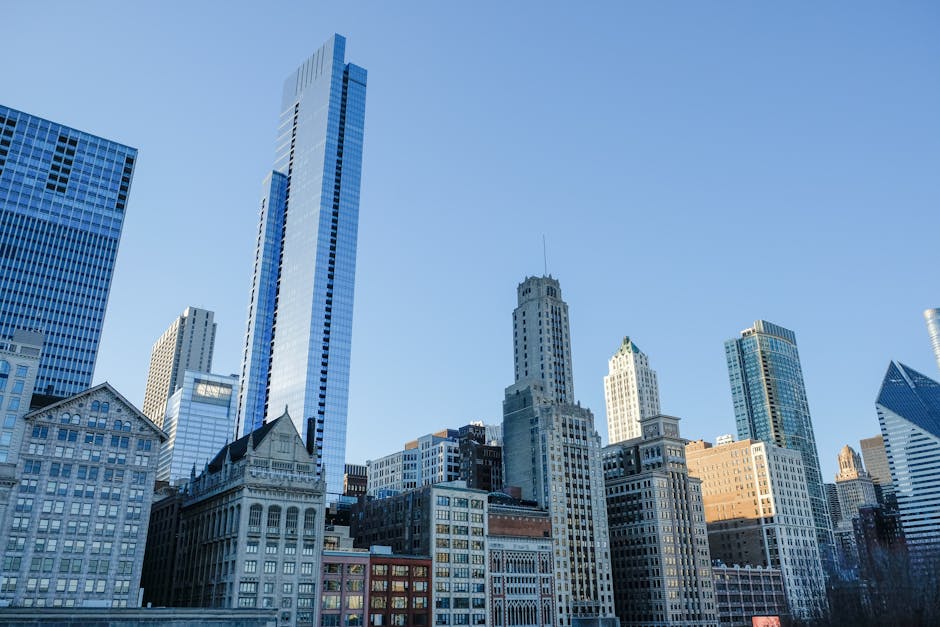
Chicago Brands Are Built to Last — Their Email Programs Should Be Too
Chicago’s business culture is built on fundamentals. Hard work, systems, and results that hold up over time — not flash-in-the-pan tactics that collapse when conditions change. That’s exactly how email marketing works when it’s done right. It’s not a channel for quick wins. It’s a compounding asset that, when built correctly, generates consistent revenue month after month regardless of what’s happening with Meta’s algorithm or Google’s ad prices.
Yet most Chicago e-commerce and retail brands treat email the same way they treated a store newsletter in 2010 — a periodic send to whoever’s on the list, often batch-and-blasted to everyone with the same message, measured by open rate, and considered successful if nothing catches fire.
That’s not an email program. That’s a missed revenue opportunity at scale. And in a city with Chicago’s density of smart, competitive brands, leaving that channel underperforming is giving ground to competitors who are investing in it.
Chicago’s E-Commerce and Retail Landscape
Chicago’s commercial character is more diversified than most major US cities. Unlike New York’s fashion dominance or Silicon Valley’s tech monoculture, Chicago has depth across a wide range of industries — and that diversity shapes how email marketing needs to work.
Food and beverage. Chicago’s food identity is serious and multi-layered. Beyond the iconic staples, the city has a thriving craft food and beverage ecosystem — artisan condiments, specialty coffee, craft spirits, better-for-you snacks, and premium meal components. These brands rely on email for subscription retention, gifting season campaigns, and the repeat-purchase mechanics that turn a one-time food discovery into a pantry staple.
Fashion and apparel. While not New York, Chicago has a strong and growing independent fashion scene — particularly in premium casual, streetwear, and sustainability-focused apparel. These brands compete on authenticity and community, and email is the channel that deepest serves both.
Home goods and furniture. Chicago’s design culture is serious. Brands in premium home goods, artisan furniture, and interior accessories have audiences with high AOV and long consideration cycles. Email flows that nurture that consideration period — with editorial content, lifestyle imagery, and timed incentives — consistently convert high-intent browsers into buyers.
Health, fitness, and wellness. Chicago’s active consumer base supports a strong market for fitness equipment, supplements, wellness products, and health-focused consumables. The subscription and replenishment mechanics in this vertical make it a natural fit for sophisticated email automation.
Retail with omnichannel presence. Chicago has a number of established retail brands that have expanded online. These businesses have the advantages of brand recognition and existing customer loyalty, but often struggle to translate in-store relationships into effective email programs. That’s a solvable gap.
Industrial and B2B-adjacent commerce. Chicago’s manufacturing heritage has produced a class of brands that sell both direct-to-consumer and into B2B channels. These hybrid businesses need email platforms that handle both use cases — which is where ActiveCampaign and HubSpot become relevant.
The Real Cost of an Underbuild Email Program
Let’s be direct about the math. If your Chicago brand is doing $2M in annual revenue and email is generating 10% of that, you’re at $200K from email. A well-built, well-managed email program for a brand your size should be generating 30–35% — meaning $600K–$700K from the channel. That’s a $400–500K gap. Annually. From revenue you’ve already earned the right to collect because the customer already knows and bought from you.
Chicago brands understand the concept of operational efficiency. An email channel producing 10% when it should produce 35% isn’t a marketing problem. It’s an operational problem with a direct dollar figure attached to it.
The causes are almost always the same: flows that aren’t built or are poorly structured, campaigns sent to unsegmented lists that depress engagement and damage deliverability, and no systematic approach to list growth or lifecycle management. All of these are fixable.
What an Effective Email Program Looks Like for Chicago E-Commerce Brands
Automated Flows: The Foundation Flows are automated email sequences triggered by subscriber behavior. They run without intervention — but they require careful architecture to perform. The flows every Chicago e-commerce brand needs:
Welcome Series — Your most revenue-critical flow. 4–5 emails over 8–10 days that introduce your brand story, educate about your product or ingredient advantage, surface social proof, and drive first purchase. Segmented by whether the subscriber opted in via a discount popup versus organic — because these two groups respond to very different messaging.
Abandoned Cart — 3 emails, timed at 1 hour, 24 hours, and 48 hours after cart abandonment. The first email is a gentle reminder with the product images. The second adds urgency or social proof. The third, if needed, may introduce an incentive for new customers. Dynamic product blocks ensure the email reflects exactly what the customer was looking at.
Browse Abandonment — Lower intent than cart, higher intent than cold. Triggered when a logged-in or cookied visitor views a product page without adding to cart. 2 emails: the first within an hour, the second the next day. Soft messaging, focus on the product story and value.
Post-Purchase Sequence — 4–5 emails starting from order confirmation. Covers shipping confirmation, delivery check-in, product education/usage, cross-sell recommendation, and a review request. Properly designed post-purchase flows add 10–15% to LTV without any additional acquisition cost.
Replenishment — For Chicago’s food, supplement, and consumable brands, replenishment timing is everything. We use predictive analytics (Klaviyo) or calculated date fields (ActiveCampaign) to send replenishment reminders timed to the customer’s actual consumption cycle.
Winback — Lapsed customers who haven’t purchased in 90–180 days need a targeted campaign, not silence. A structured winback flow with an appropriate incentive recovers 15–25% of lapsed customers in our experience.
Campaign Strategy: Beyond the Blast Campaigns are the manual sends — promotional emails, seasonal campaigns, product launches, and editorial content. For Chicago brands, the campaign calendar typically aligns with:
- Seasonal buying patterns (Q4 is critical for gift-focused and food brands)
- Product launches and restocks
- Local events and cultural moments relevant to your audience
- Loyalty and VIP moments
Every campaign should be segmented. Sending the same message to your loyal VIP buyers as you send to someone who bought once 18 months ago is the fastest way to depress engagement and burn list health.
How Excelohunt Works with Chicago Brands
We are a done-for-you email marketing agency. That phrase has different meanings depending on who you talk to. For us, it means the following: we handle every piece of the email program — strategy, copywriting, design, technical build inside your ESP, segmentation, deployment, and reporting. You review and approve. We execute.
Our engagement with a Chicago brand typically follows this structure:
Email Revenue Audit (Free) We start by auditing your current email setup. We look at every active and inactive flow, your campaign history, your segmentation structure, your deliverability health (sender score, bounce rates, spam complaint rate), and your list quality. Most brands have multiple significant revenue leaks that we identify in the audit.
Platform Fit Assessment We confirm you’re on the right platform for your business needs:
- Klaviyo for Shopify-native DTC brands that need deep e-commerce automation and predictive analytics
- ActiveCampaign for brands with complex automation needs, CRM integration requirements, or hybrid DTC/B2B models — common in Chicago’s diversified commercial landscape
- HubSpot for brands where marketing automation connects to a sales team and CRM — increasingly relevant for Chicago’s mid-market retail brands
- Mailchimp for earlier-stage brands with simpler needs
Build Phase We build your complete automated flow suite and get the first campaigns deployed. Timeline: 30 days to full live infrastructure.
Ongoing Management We manage your campaign calendar, maintain your flows (A/B testing, seasonal updates, performance optimization), grow your list, and report monthly on attributed revenue.
CAN-SPAM and Deliverability: Chicago Brands, This Matters
Chicago brands sending commercial email to US subscribers are subject to CAN-SPAM. Every email we send includes a clear unsubscribe mechanism, an accurate “from” address and business identity, and your physical mailing address. We honor unsubscribe requests immediately. We don’t use deceptive subject lines or misleading sender identities.
Beyond legal compliance, we manage deliverability proactively. That means:
- Warming new sending domains properly before full-volume sends
- Suppressing unengaged subscribers from campaigns to protect sender reputation
- Monitoring bounce rates and spam complaint rates continuously
- Maintaining proper DNS records (SPF, DKIM, DMARC) to authenticate your sending domain
Deliverability is the invisible factor that makes or breaks email revenue. A brand with a poor sender reputation might be “sending” 10,000 emails but having 40% land in spam. We keep that from happening.
Frequently Asked Questions
Do you work with retail brands that also have physical stores? Yes. Omnichannel retailers — brands with both physical and online presence — are a core part of our client base in Chicago. We build email programs that support both channels, including in-store customer win-back sequences and online-exclusive offers that drive DTC revenue.
We’re on ActiveCampaign. Can you work with that? Absolutely. ActiveCampaign is a strong platform for Chicago brands with complex automation needs, and we have deep expertise in it. We work with Klaviyo, ActiveCampaign, HubSpot, and Mailchimp.
How do you handle promotional emails versus educational content? We build a balanced campaign calendar. Most brands benefit from a mix — 60–70% promotional (offers, launches, seasonal campaigns) and 30–40% educational or relationship-building content. The right balance depends on your brand, category, and list engagement levels.
What if our list is old and disengaged? A disengaged list is a common starting point. We handle re-engagement campaigns and sunset flows that reactivate the recoverable segment and clean the rest — improving deliverability and making your active list healthier.
How long is your typical engagement? We work on monthly retainers. Most clients engage for at least 3 months to see the compounding effects of both flows and campaigns. Many Chicago clients have been with us for 12+ months.
The Chicago Opportunity
Chicago’s e-commerce brands have the audience, the product, and the brand recognition to build email programs that generate serious revenue. Most just haven’t built the infrastructure. That’s the gap Excelohunt fills — not with strategies and frameworks, but with built, deployed, and managed email systems that produce attributable results.
Ready to grow your Chicago brand’s email revenue? Get a free email audit →
Want Us to Implement This for Your Brand?
Get a free email audit and see exactly where you're losing revenue.
Get Your Free Audit