Digital Clienteling via Email: How Luxury E-Commerce Brands Replicate In-Store Personalisation
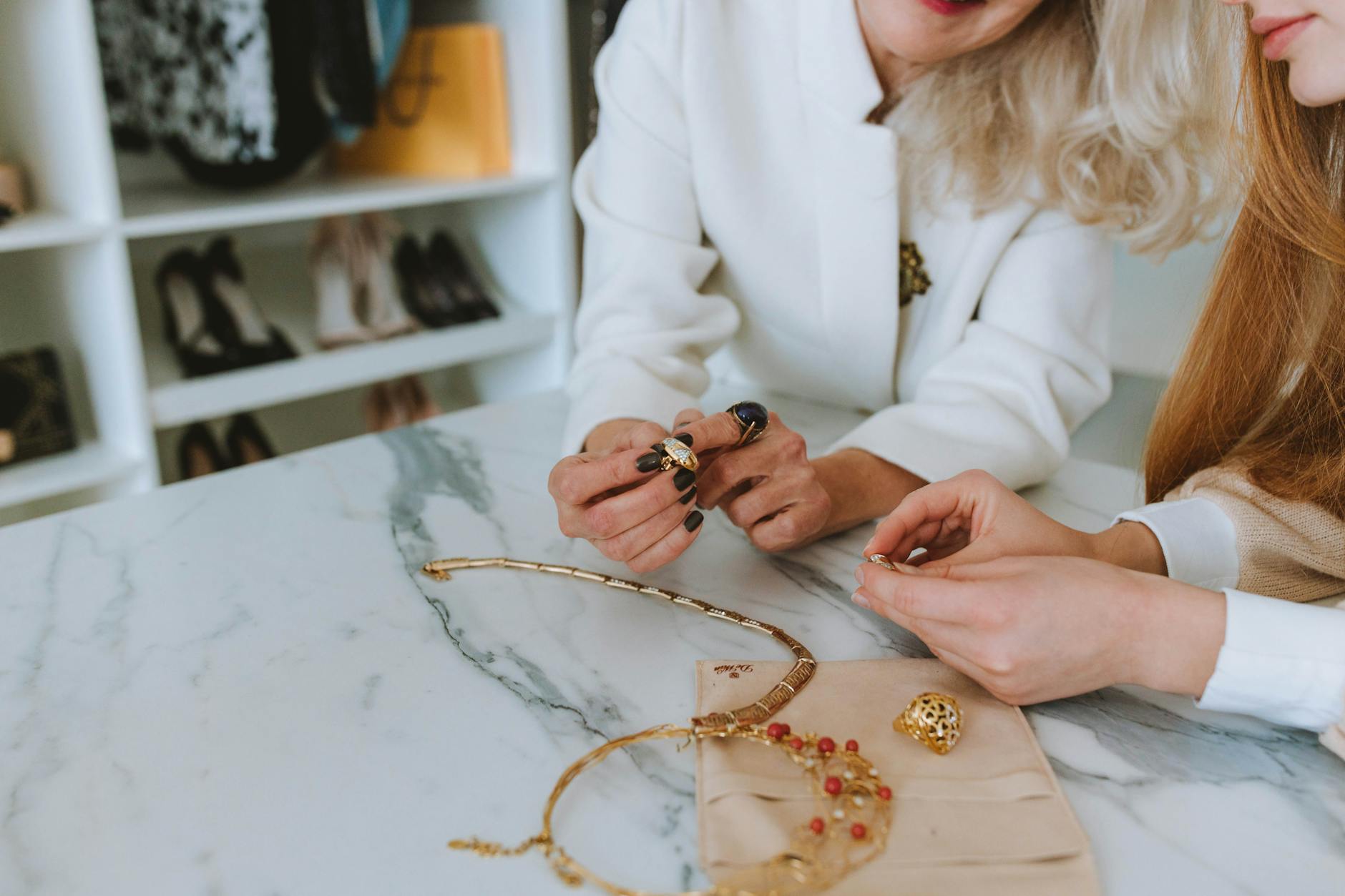
Walk into any serious luxury boutique and you will encounter a dynamic that the best brands have spent decades perfecting: the sales associate who knows you. Who remembers that you bought the camel coat last season. Who sets aside new arrivals they think you will love. Who calls to let you know the shoes you wanted have come back in stock in your size.
This is clienteling — the art of building an individual relationship with each client that makes them feel known, valued, and served at a level that no mass-market brand can replicate.
E-commerce has historically been the antithesis of clienteling. Anonymous transactions. Generic product recommendations. Algorithmic emails that treat every customer as a behavioural data point rather than a person.
But the best luxury e-commerce brands have found a way to replicate the clienteling experience digitally — and email is the primary channel where this happens.
What Digital Clienteling Actually Means
Digital clienteling is not simply “personalisation” in the sense of inserting a customer’s first name into an email. That is table stakes. Real clienteling is:
- Demonstrating that you know the customer’s specific taste, not just their demographic profile
- Reaching out proactively with relevance, not reactively with offers
- Communicating with a one-to-one tone, even at scale
- Building a relationship over time that deepens with each interaction
In practical email terms, this means:
- Purchase history-informed recommendations that are genuinely tailored
- Hand-selected (or hand-selected-feeling) product curation with a named human voice behind it
- Proactive outreach at the right moments with the right message
- Post-purchase follow-up that treats the sale as the beginning of a relationship
Building the Clienteling Data Foundation
Before clienteling can happen, you need data. The more richly you understand each customer, the more genuinely personalised your emails can be.
What to Collect and Why
Purchase history: Every purchase tells you something. Not just the product category, but the price point, the colour preferences, the occasion (if captured), the frequency.
Preference data from account profiles: Many luxury brands ask customers to complete a style profile during account registration. Style preferences, size information, occasion preferences (work, formal, casual), colour affinities.
Browsing behaviour: What they consistently look at but do not buy can tell you as much as what they purchase. A customer who repeatedly views a particular category but never buys may be considering a gift, be price-sensitive on that specific category, or be waiting for the right piece.
Return reasons: A customer who returned a suit and noted “not the right cut for my build” is telling you something specific about what does and does not work for them.
Communication preferences: Do they respond to emails quickly? Do they prefer detailed product descriptions or clean editorial imagery? Response patterns reveal how to communicate effectively with each customer.
The Client Dossier Concept
The best luxury clienteling is built on something like a client dossier — a structured record of what you know about each customer’s taste, history, and preferences. In digital terms, this translates to a well-managed customer profile in your CRM or email platform.
Build custom fields for:
- Style category preferences (classic, avant-garde, understated, statement)
- Key life occasions relevant to purchasing (business travel, formal events, leisure)
- Family or household composition (relevant for gifting)
- Previous personal shopper interactions or notes
- VIP tier status and tenure
This data foundation is what makes the subsequent clienteling emails feel genuinely personal rather than algorithmically generated.
The Personal Stylist Email Format
The personal stylist email is the most powerful clienteling format available in luxury e-commerce email. It mimics the boutique experience of a trusted sales associate reaching out personally.
Key Characteristics of the Personal Stylist Email
It comes from a named person, not a brand. The email is from “Sarah, Personal Stylist at [Brand]” or “Alexandre, your client services manager” — not from “[Brand] Newsletter.” The sender name alone changes the relationship with the email before it is opened.
It is written in first person with a direct address. “I have been setting aside a few pieces I thought you would appreciate” reads entirely differently from “We think you’ll love these new arrivals.” One is personal. The other is marketing.
It references what the stylist specifically knows about the client. “Knowing your preference for understated tailoring, I wanted you to be among the first to see the new [Designer] collaboration” — this is the key move that makes the email feel genuine rather than generic.
It offers service, not just product. The email often ends with a service offer: “If you would like a more detailed look at any of these pieces, or if you would prefer I hold something for you before it sells, please do reply or call me directly.”
Subject Line Examples for Personal Stylist Emails
- “A note from your stylist at [Brand]”
- “I have been thinking of you — some pieces worth seeing”
- “From [Stylist Name]: something I had to share with you”
- “Reserved for you — but only until [Date]”
- “I found what you were looking for”
These subject lines work because they signal personal correspondence, not broadcast marketing. Open rates for stylist-attributed emails in luxury programmes are consistently above standard email benchmarks because subscribers genuinely want to know what their stylist has found for them.
Bespoke Product Recommendation Flows
At a more systematic level, bespoke recommendation flows use purchase and preference data to deliver genuinely tailored product suggestions at the right moment.
The New Arrival Notification Flow
When new products arrive that match a specific client’s known preferences, trigger an email that surfaces those products with context.
Subject line examples:
- “Something new that matches your style exactly”
- “New arrival: I thought of you immediately”
- “It arrived. And it’s exactly your thing.”
The email works in concert with the purchase history data. A client who has bought three pairs of Derby shoes in classic colours and in sizes indicating preference for slim last construction receives a new arrival notification only when new shoes matching that profile arrive. Not every new shoe. Their shoes.
This level of curation requires good data hygiene and category tagging but delivers dramatically higher click-through rates and purchase conversion than generic new arrival broadcasts.
The Wish List Fulfilment Flow
If your luxury e-commerce platform allows customers to save items to a wish list or favourites section, trigger an email when a saved item becomes available in a new colour or variant, restocks, or becomes available in their size.
Subject line examples:
- “Something you saved is now available”
- “The piece you wanted — it’s back, and it’s here for you first”
- “Your wishlist: the [Product Name] is here in a new colour”
The wish list fulfilment flow is as close as digital commerce gets to the boutique experience of a sales associate calling to say “that coat you wanted — it came in.”
Complementary Piece Recommendation
After a significant purchase, trigger a recommendation email featuring complementary pieces with a clienteling frame — not “customers who bought this also bought” but “to complete the look” from a named stylist’s perspective.
Subject line examples:
- “What would complete your [Purchase] perfectly”
- “From [Stylist Name]: three pieces that were made to accompany your [Purchase]”
- “The rest of the look — selected for you”
The complementary piece email has strong revenue potential because the customer is at peak engagement with your brand, having just made a significant purchase. The recommendation lands with genuine relevance.
High-Touch Post-Purchase Email Sequences
The post-purchase experience is where most luxury e-commerce brands dramatically underperform compared to their in-store counterparts. A boutique purchase is followed by attention, care, and follow-up. An online luxury purchase typically gets the same confirmation email as any other e-commerce transaction.
The Artisan’s Note Post-Purchase Email
This email, sent 1–3 days after delivery, comes from a voice within the brand — ideally the brand founder, creative director, or lead craftsperson — and acknowledges the purchase with genuine warmth and specific knowledge.
Subject line examples:
- “A note on your [Product Name] from our atelier”
- “From the maker of your [Product Name]”
- “Your [Product Name] — a few thoughts from [Brand Founder]”
The email speaks specifically to the item purchased: its provenance, the craftsmanship behind it, the materials and why they were chosen, what to expect as the item ages or wears in. This is information a boutique sales associate would share during the purchase — the digital equivalent is this email.
For a leather goods brand: “The calf leather we sourced for this collection comes from a tannery in Tuscany we have worked with for eleven years. You will notice that the leather is slightly stiff when you first carry it — it will soften over the first few months and develop a patina that is entirely unique to how you use it.”
This email builds deep connection to the product, reduces buyer’s remorse, and significantly lowers return rates.
The 30-Day Check-In
A short, warm email 30 days after purchase continues the clienteling relationship.
Subject line examples:
- “A month in — how is your [Product] feeling?”
- “Checking in from [Brand]”
- “We hope your [Product] has been everything it should be”
This email is genuinely short. Two to three sentences checking in on the customer’s experience, offering to help with any questions, and perhaps noting something new that has arrived which might be relevant to them. It does not push for a new purchase — it simply maintains the relationship.
The 30-day check-in email generates an unusually high reply rate. Luxury customers who feel seen and cared for after their purchase respond. Those conversations are the beginning of genuine loyalty.
The “Your Product Is Due for Care” Email
For products that benefit from ongoing care — leather goods, fine watches, cashmere, footwear — a care reminder email at six months or one year positions the brand as a long-term custodian, not just a seller.
Subject line examples:
- “Your [Product] has been with you a year — it might be time for care”
- “A year on: how to keep your [Product] at its best”
- “Your [Leather Bag] deserves some attention — here’s how to care for it”
This email provides specific care advice and subtly introduces the brand’s care service (if available) or products. It demonstrates that the brand’s relationship with the client extends well beyond the transaction.
Scaling Clienteling Without Losing Its Soul
The challenge for luxury brands is executing clienteling at scale without losing the personal quality that makes it work. Some principles:
Segment aggressively. True clienteling requires small, clearly defined segments. Do not try to send the same email to 50,000 subscribers and call it personalised. Your top 500 clients deserve different email treatment than your general list.
Use automation to trigger, not to write. Automated triggers can identify the right moment to send a clienteling email. But the email itself should sound human, warm, and considered — not algorithmically generated.
Invest in the sender identity. A named stylist or client services person behind the email is not just a copy tactic — it is a business decision. That person needs to actually exist, be identifiable, and ideally be reachable. When a subscriber replies to a clienteling email, someone should receive that reply and respond with equal care.
Digital clienteling done well is one of the most powerful differentiators a luxury e-commerce brand can have. It creates loyalty that no competitor can easily replicate — because it is built on genuine relationship, not just product.
If you want to build a clienteling email programme for your luxury brand, request your free audit at Excelohunt. We work with premium and luxury brands to create email strategies that match the quality of the products they sell.
More in E-Commerce
- Email Marketing for UK Subscription Box Brands: Reducing Churn and Growing LTV
- Email Marketing for Australian Shopify Brands: The Complete Setup Checklist
- Email Marketing for UK Supplements & Nutrition Brands
- How Australian E-Commerce Brands Can Win Back Lapsed Customers With Email
- Email Marketing for Canadian Supplements & Nutrition Brands
Want Us to Implement This for Your Brand?
Get a free email audit and see exactly where you're losing revenue.
Get Your Free Audit