First-Purchase Retention for Men's Grooming Brands: The 90-Day Email Sequence That Converts
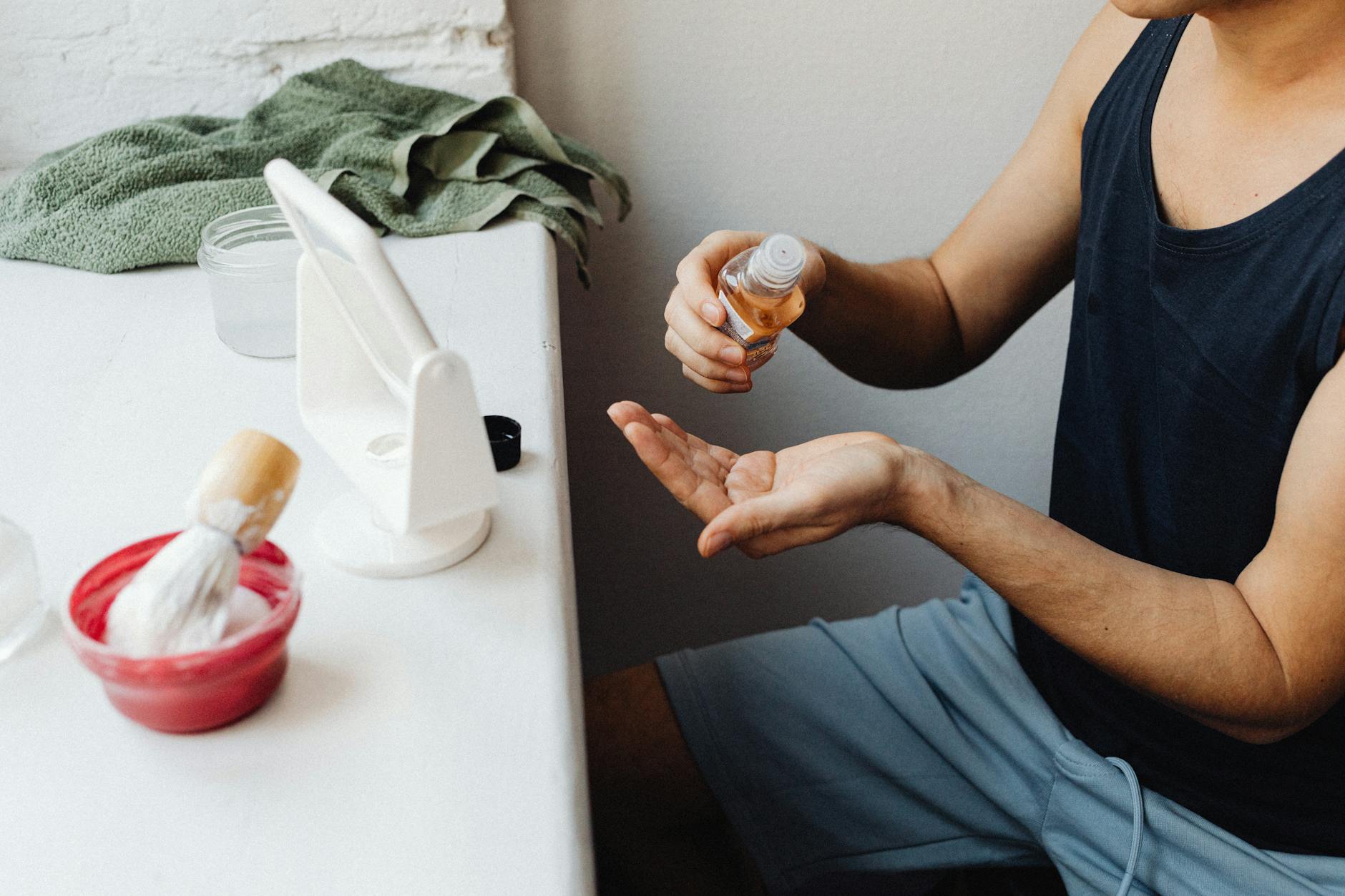
Men’s grooming is one of the fastest-growing categories in e-commerce. It’s also one of the most leaky. The data tells a consistent story across brands in the space: first-purchase conversion rates are strong, driven by social proof, influencer marketing, and strong product positioning. Second-purchase conversion rates are abysmal.
The average men’s grooming brand retains fewer than 25% of first-time buyers for a second purchase. For comparison, leading brands in the category retain over 50%.
The difference isn’t product quality. It’s what happens — or doesn’t happen — in the 90 days after that first order ships.
Most brands send a shipping confirmation and a review request. That’s it. The customer uses the product, finishes it (or doesn’t), and moves on. Nobody followed up. Nobody checked how it was working. Nobody reminded him it was time to reorder.
This guide covers the full 90-day post-purchase email architecture that turns first-time grooming buyers into repeat customers.
Why the 90-Day Window Is Critical
In men’s grooming, the first 90 days contain three decisive moments:
Day 0–14: First impressions. The customer is trying the product and forming an opinion. If no one addresses his experience during this window, he’ll form that opinion alone — which means any problem (adjustment period, wrong application technique, unmet expectations) goes unaddressed and becomes a reason not to repurchase.
Day 30–45: Replenishment trigger. Most grooming products — cleansers, beard oils, shampoos, serums — run out in 30–45 days with regular use. This is the window where the repurchase decision is made. If he doesn’t receive a reminder from you, he’ll search Google, find a competitor, and buy from them.
Day 60–90: Routine entrenchment. By 90 days, a grooming habit is either established or it isn’t. Customers who have integrated your product into their daily routine by day 90 become long-term loyalists. Customers who haven’t typically churn. Your email program in this window can actively drive routine formation.
The 90-Day Post-Purchase Email Sequence
Days 1–7: Welcome and Tutorial Phase
Email 1 — Day 1: The product welcome
Subject: “Your [Product] is on its way. Here’s what to expect.”
This email should arrive before the product does. Use this window to:
- Set outcome expectations (what results they should see and when)
- Introduce the ideal usage routine (specific: “Use on clean, slightly damp skin every morning”)
- Address the most common first-time mistake for this product
- Build anticipation and reinforce the purchase decision
Subject line variations:
- “[First name], your [Product] ships today. A note before it arrives.”
- “Before you open the box: read this first.”
Email 2 — Day 3: Tutorial deep-dive
Subject: “Getting the most out of [Product]: the 3-minute routine”
By day 3, most customers have received their order. This email goes deeper on technique:
- Step-by-step application guide (with GIFs or video thumbnails if possible)
- Amount to use (over-application is the most common mistake in grooming)
- When to apply (morning vs. evening, pre or post shower)
- How to know it’s working
Men respond well to specificity. “Apply a dime-sized amount to clean, towel-dried skin” is more useful and more reassuring than “apply as needed.” Specific instructions reduce the anxiety of trying something new and increase the chance of correct usage — which directly improves results and repurchase intent.
Email 3 — Day 7: First week check-in
Subject: “One week in with [Product]. What’s happening?”
Ask how it’s going. Literally. Include a one-click survey (great / ok / not sure yet) and follow up differently based on each response.
- “Great” response: Move them toward the upsell sequence faster
- “OK” response: Send a troubleshooting follow-up the next day
- “Not sure yet” response: Send a “what to expect in weeks 2–4” email that normalizes the adjustment period and encourages patience
This branching logic is easy to build in Klaviyo and dramatically improves both satisfaction and retention.
Days 8–30: Routine Formation Phase
Email 4 — Day 14: The science behind the results
Subject: “Why [Product] takes 2–4 weeks to really kick in”
For skincare and beard care products especially, results require consistent use over time. Customers who understand this stick with the product longer. Customers who don’t, give up.
This educational email:
- Explains the biological mechanism behind the product (skin cell turnover cycles, beard hair growth phases, etc.)
- Sets realistic expectations for the 2–4 week mark
- Includes before/after examples from real customers at the 30-day mark
- Positions consistent use as the key variable (not the product quality)
Email 5 — Day 21: Routine reinforcement
Subject: “The 21-day mark. You’re building a habit.”
Research on habit formation suggests the 21-day mark is psychologically significant — customers who have used a product consistently for three weeks are dramatically more likely to continue. Acknowledge this explicitly.
Include:
- Validation of the three-week commitment
- A checklist of what they should have noticed by now
- An invitation to share their experience (review request, but framed as sharing rather than reviewing)
- A “what’s next” hint — introducing the concept of a fuller routine
Days 31–60: Replenishment and Expansion Phase
Email 6 — Day 30: Replenishment trigger
Subject: “Running low on [Product]? Most guys are at this point.”
This is the single highest-revenue email in the entire sequence for most grooming brands. The timing is critical: send it at 30 days for daily-use products, adjust based on product size and typical usage rate.
Structure:
- Acknowledge the timing naturally (not “we calculated that you should be running out”)
- Present reorder as the obvious next step
- Offer a reorder incentive that rewards the behavior rather than just the discount: “Your reorder is ready. Add a second bottle at $[X] less — our repeat-customer rate on this one is 78% for a reason.”
- Include a subscription option with the time savings and cost savings clearly quantified
Email 7 — Day 37: Post-replenishment window (for non-repurchasers)
Subject: “Haven’t heard from you in a while. How are things?”
If they didn’t reorder at the 30-day trigger, this email takes a softer approach. No pressure. Just a check-in that subtly re-opens the door.
Include a customer story: “We heard from [Customer name] who almost gave up at week 4. Two months later, here’s what he told us.” This narrative email re-ignites engagement without a direct sales push.
Email 8 — Day 45: The routine expansion email
Subject: “The next step most guys add after [Product]”
By day 45, a retained customer is ready for expansion. This email introduces the most natural complementary product in your range — positioned not as an upsell but as a logical next step.
Use a “results unlocking” frame: “You’ve been using [Product 1] for 6 weeks. To get the full benefit, most guys add [Product 2] at this stage. Here’s why.”
Days 61–90: Loyalty and Long-Term Retention Phase
Email 9 — Day 60: The results milestone
Subject: “60 days with [Brand]. Here’s what usually changes at this point.”
Position the 60-day mark as a milestone worth acknowledging. Include:
- General results customers typically see at 60 days (with real customer quotes)
- An invitation to share their own results (photo submission, UGC prompt)
- A loyalty recognition: “As a 60-day customer, you qualify for [X]” — whether that’s a loyalty tier, a discount on a next order, or early access to a new product
Email 10 — Day 75: Social proof and community
Subject: “What [X] guys who started where you did are doing now”
By 75 days, customers who are still engaged are strong candidates for becoming brand advocates. Feature the broader customer community: transformation stories, routine evolutions, community tips.
Email 11 — Day 90: The 90-day milestone email
Subject: “90 days with [Brand]. You’re one of our most consistent customers.”
This is a celebration email and a loyalty reward delivery. Include:
- Recognition of the 90-day consistency
- A loyalty reward (a gift with next purchase, points bonus, or exclusive product access)
- A prompt to join a loyalty program if you have one
- A subscription invitation with a “you’ve proven this works for you — lock in your price” framing
Replenishment Timing Calibration
One of the most impactful things you can do for retention is simply get your replenishment email timing right. Here’s how to approach it by product category:
| Product Type | Typical Duration | Replenishment Email |
|---|---|---|
| Daily face wash (100ml) | 30–40 days | Day 28 |
| Beard oil (30ml, daily use) | 45–60 days | Day 42 |
| Shampoo (250ml, daily use) | 30–45 days | Day 28 |
| Moisturizer (50ml, twice daily) | 35–45 days | Day 30 |
| Shaving cream (100ml) | 60–90 days | Day 55 |
If you have size variants or usage data from a loyalty program or subscription, use it to calibrate individual replenishment timing. Even rough personalization (daily vs. occasional use) dramatically improves replenishment email conversion.
Loyalty Program Email Integration
If you have a loyalty program, the post-purchase sequence is where you integrate it most effectively.
Day 1 email: Mention that the first purchase earned [X] points. Include current points balance. Day 30 email: “Your [X] points are worth $[Y] off your next order. Your replenishment is on the house.” Day 90 email: Points milestone celebration if applicable.
The key is making points feel real and concrete, not abstract. “$12 waiting for your next order” lands differently than “1,200 points in your account.”
Key Metrics for Your 90-Day Sequence
Track these metrics to optimize the sequence over time:
- Day 7 survey response rate: Benchmark 15–25%; lower means your product isn’t landing
- Day 30 replenishment conversion rate: Benchmark 20–35% for retained buyers
- 90-day repeat purchase rate: Benchmark for well-run sequences is 45–55%
- 90-day LTV vs. control: Compare the LTV of customers who received the sequence vs. those who received only standard post-purchase emails
The Real Cost of Not Having This Sequence
If your current post-purchase flow is just a shipping confirmation and a review request, the math on what you’re leaving behind is straightforward.
At a $60 average order value and a 10% improvement in 90-day repeat purchase rate (well within reach for most brands), a grooming brand doing $500K per year generates $50K in additional annual revenue from this sequence alone. Without adding a single new customer.
That’s the proposition: spend your effort retaining the customers you already have rather than continuously acquiring new ones at rising CAC.
Ready to Build Your Retention Sequence?
A 90-day post-purchase sequence requires careful planning — the right triggers, the right segmentation logic, the right tone for each phase. Getting it right the first time is far more effective than iterating blindly.
Get a free audit of your current email program and our team will show you exactly where your post-purchase retention is breaking down — and what a full 90-day sequence could add to your brand’s revenue.
Related Excelohunt Services
Looking to implement these strategies with expert support?
- Email Automations — learn how we implement this for clients
More in E-Commerce
- Email Marketing for UK Subscription Box Brands: Reducing Churn and Growing LTV
- Email Marketing for Australian Shopify Brands: The Complete Setup Checklist
- Email Marketing for UK Supplements & Nutrition Brands
- How Australian E-Commerce Brands Can Win Back Lapsed Customers With Email
- Email Marketing for Canadian Supplements & Nutrition Brands