Email Upsell Strategy for Men's Grooming Brands: Moving From Single SKU to Full Routine
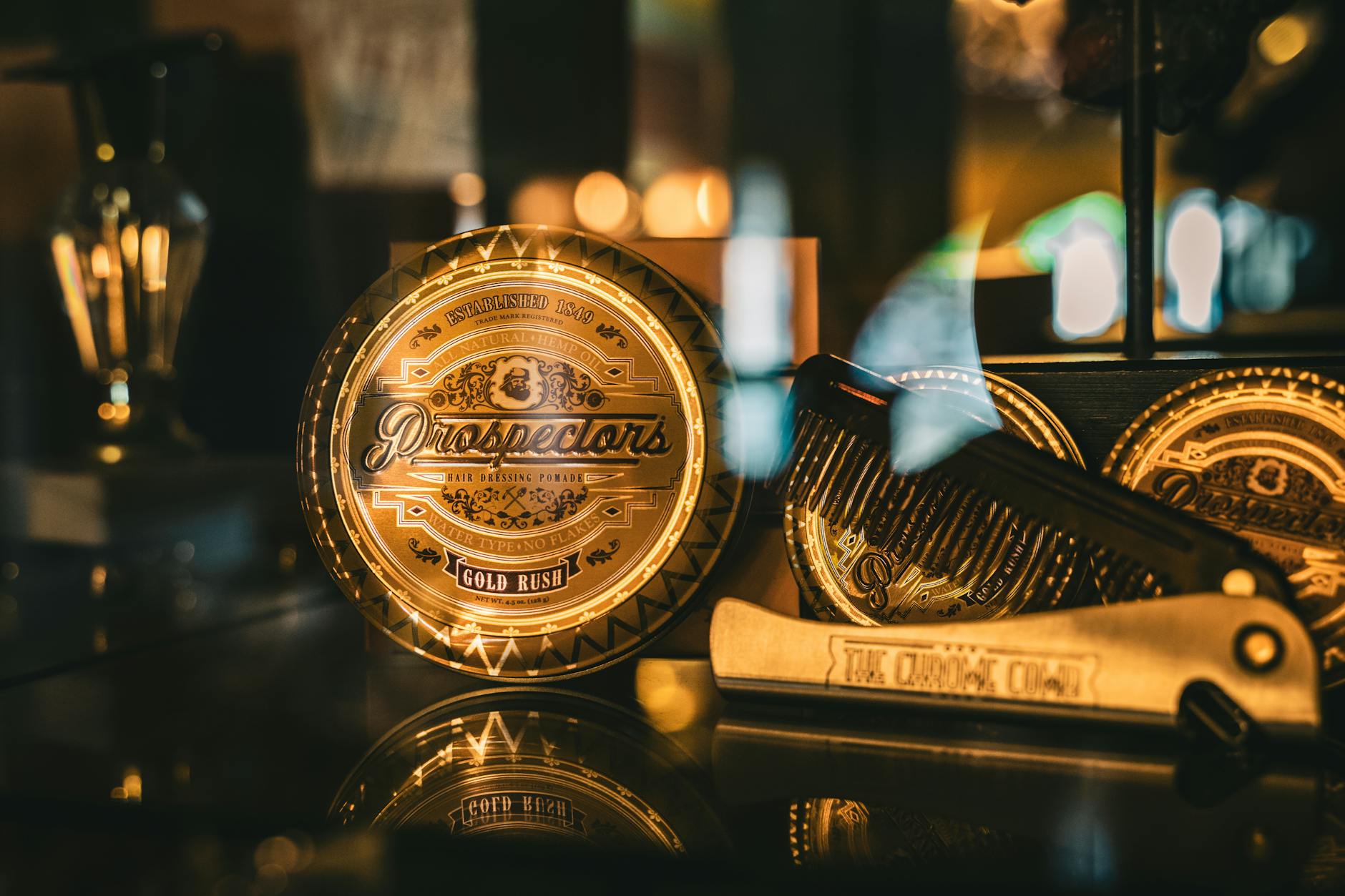
The typical men’s grooming customer journey looks like this: he finds your beard oil on Instagram, reads a few reviews, buys a bottle. He likes it. He uses it until it runs out. Then he searches “beard oil” again, buys from wherever ranks first, and you never see him again.
The problem isn’t product quality. It’s that you never showed him what came next.
Most men’s grooming brands have four to twelve products that, together, form a complete grooming routine. The moisturizer that pairs with the cleanser. The pre-shave oil that makes the razor work better. The hair product that needs the right shampoo to perform. These products are designed to work together — but your customers don’t know that unless you tell them.
Email is how you tell them.
The Single-SKU Trap in Men’s Grooming
Men buy grooming products differently than women. Research consistently shows that male grooming shoppers:
- Are more brand-loyal once they find products that work
- Are less likely to browse and discover independently
- Are more responsive to specific, functional product recommendations
- Prefer to be told what to do with less research required
These characteristics are both a challenge and an opportunity. The challenge: men won’t spontaneously explore your product range. The opportunity: if you give them a clear, functional reason to add a second product to their routine, they’ll do it — and then they’ll keep doing it.
The brands winning in men’s grooming (Bevel, Supply, Beardbrand) have figured out that education-first email is the unlock. They don’t send promotional emails saying “buy our moisturizer.” They send educational emails explaining why moisturizer is the missing step in a beard care routine — and then they show you theirs.
Building the Grooming Routine Education Sequence
This is a post-purchase email flow triggered by a customer’s first purchase. The goal over 30–45 days is to walk the customer through a complete routine that naturally incorporates additional products.
Email 1 — Product Welcome + First Use Guide (Day 1)
Subject: “Your [Product Name] has arrived. Here’s how to actually use it.”
This email does two things: confirms the purchase was a good decision, and immediately begins educating.
Go beyond the instructions on the packaging. Include:
- The ideal application method and timing (morning vs. evening, pre or post shower)
- What to expect in the first two weeks (especially important for skincare where there’s an adjustment period)
- One common mistake to avoid
- A one-sentence tease about how this product fits into a broader routine (“Most guys pair this with our [Product 2] — we’ll tell you why in a few days”)
Email 2 — Week One Check-In + Routine Context (Day 7)
Subject: “A week with [Product Name]. What you should be noticing.”
This email validates their experience and begins introducing routine context.
Structure:
- What results they should be seeing by now (specific: “skin should feel less tight after washing” not just “skin looks better”)
- What it means if they’re not seeing results yet (normalizes variation)
- Introduction of “step 0” — the product that should come before the one they bought. For a beard oil buyer, this might be a cleanser. For a skincare buyer, it might be an exfoliator. The framing: “To get the most out of [Product 1], your skin/beard needs a clean base.”
The “step before” introduction is often more effective than “the next step” because it feels less like upselling and more like troubleshooting.
Email 3 — The Missing Step (Day 14)
Subject: “The one thing most guys skip that makes everything else work better”
This is your primary upsell email, but it doesn’t feel like one. It’s structured as an educational piece: here’s a common mistake in grooming routines, here’s why it matters, here’s how to fix it.
Structure:
- The problem: “Most guys go straight to product without prepping the skin/beard/hair. Here’s what that costs you.”
- The science (briefly): why the prep step matters functionally
- The recommendation: your complementary product, positioned as the functional unlock for their existing purchase
- Social proof: “Our customers who use [Product 1] + [Product 2] together report [specific result]”
- A clear, no-pressure CTA: “Add [Product 2] to your routine”
Email 4 — The Complete Routine Reveal (Day 21)
Subject: “The 4-step routine that takes under 3 minutes”
Men respond to simplicity and time efficiency. A “complete routine” sounds overwhelming; a “4-step routine that takes under 3 minutes” sounds manageable.
This email presents your full routine stack:
- Each product in the sequence (Step 1 → Step 2 → Step 3 → Step 4)
- The time commitment per step (30 seconds for this, 1 minute for that)
- The cumulative benefit of the full routine vs. individual products
- A bundle CTA: “Get the complete routine at [X]% less than buying individually”
Presenting the bundle after they’ve already been educated on why each step matters is dramatically more effective than presenting it upfront.
Email 5 — Subscription Introduction (Day 30)
Subject: “Never run out of [Product Name] again — and save [X]% doing it”
By day 30, your customer is nearing the end of their first product. This is the moment to introduce subscription.
Key elements:
- Timing acknowledgment: “Most guys run out of [Product] around the 30-day mark”
- The practical value of subscription: auto-delivery, saving, never running out
- The subscription upsell: offer a bundle subscription that includes their original product plus one or two complementary products they’ve been introduced to over the sequence
- Easy opt-out language: men are subscription-skeptical; address it directly. “Cancel or pause anytime. No fees, no commitment.”
Product Sequence Recommendation Emails
Beyond the onboarding flow, you should have a standing recommendation engine that suggests complementary products based on purchase history.
The “Natural Next Product” Email
This is a standalone campaign or flow that triggers 45–60 days after a purchase, focused specifically on the most natural product addition for each SKU.
Examples:
- Bought beard wash → recommend beard oil (with educational framing: “Beard wash removes oils — here’s how to replace them”)
- Bought face wash → recommend moisturizer (“If you’re washing your face without moisturizing after, here’s what’s happening to your skin barrier”)
- Bought hair pomade → recommend shampoo designed for styled hair (“Regular shampoo strips pomade styling agents. Here’s what to use instead.”)
The specificity is what makes these emails work. Not “here are more products you might like” but “here’s exactly why these two products belong together.”
The Routine Audit Email
Send this to your full active customer base quarterly. Subject: “Quick question: what does your grooming routine actually look like?”
Include a short survey (3–4 questions) about their current routine. Use responses to:
- Segment customers by routine complexity (basic / developing / full routine)
- Trigger targeted recommendation flows based on what they’re missing
- Generate social proof content (e.g., “67% of our customers who started with just our cleanser now use 3+ products”)
Subscription Upgrade Flows
If you offer a subscription product, the upgrade flow — moving customers from single-product subscriptions to bundle subscriptions — is one of the highest-ROI email sequences you can build.
Trigger: Single-Product Subscriber, 60+ Days Active
Subject: “You’ve been using [Product] for 2 months. Here’s what comes next.”
This email:
- Acknowledges and validates the subscription (“You’ve been consistent — that’s where results come from”)
- Introduces the concept of the full routine
- Presents the bundle subscription upgrade as a natural progression
- Quantifies the savings: “Upgrading to the [Routine Name] bundle saves you $[X] per month vs. buying separately”
The “Skip Month” Save
When a subscriber tries to pause or cancel, trigger a save sequence:
Email 1 — Immediate (triggered by pause/cancel intent): “Before you go — is it the timing or the product?”
Offer a skip option (“Skip next delivery, keep your discount”) before going to a full cancellation save.
Email 2 — 24 hours later (if no action): “We’ve paused your subscription. Here’s your save offer.”
Offer a downgrade (to a single product from a bundle) rather than a full cancel. This retains revenue and keeps the customer in the subscription ecosystem.
Subject Line Swipe File for Grooming Upsell Emails
- “You’ve been using [Product] wrong. Here’s the fix.”
- “The 2-minute upgrade to your morning routine”
- “Why [Product 1] works even better with this”
- “Your grooming routine, ranked (and what’s missing)”
- “3-step morning routine. You’re only doing 1.”
- “What happens to your skin if you skip this step”
- “Add one product. See a visible difference in 2 weeks.”
- “Running low on [Product]? Here’s how to never run out again.”
Klaviyo Segmentation for Grooming Upsell
In Klaviyo, your upsell architecture depends on accurate product purchase segmentation. Build these core segments:
- Single-product purchasers: Bought only one SKU, never returned — primary upsell target
- Two-product purchasers: On the path to a full routine — send routine completion content
- Full routine customers: Bought 4+ complementary SKUs — prioritize subscription and loyalty
- Lapsed single-product subscribers: Cancelled after 1-2 months — different win-back strategy than multi-product customers
Each segment needs a different email strategy. A single-product purchaser needs education. A full routine customer needs retention and subscription stickiness. Treating them the same is the core mistake most grooming brands make.
The LTV Math That Makes This Worthwhile
Here’s the business case in plain terms:
A customer who buys one product at $28 and never returns generates $28 LTV.
A customer who completes a 4-product routine generates $90–140 in the same period.
A customer who subscribes to a 4-product routine bundle at $85/month generates over $1,000 LTV in a year.
The product is good enough to drive that journey — most men who try a well-formulated grooming product do see results and do want more. The gap is in education and recommendation. Email is the most cost-effective channel to close that gap at scale.
Ready to Build Your Grooming Brand’s Upsell Email System?
An effective upsell email architecture for a men’s grooming brand involves a post-purchase education sequence, product pairing campaigns, subscription flows, and subscriber save sequences — all working together. Building it correctly from the start saves months of patching and guesswork.
If you want our team to audit your current flows and build out a full upsell architecture for your grooming brand, start with a free email audit. We’ll map your current customer journey and show you exactly where LTV is being left on the table.
Related Excelohunt Services
Looking to implement these strategies with expert support?
- Email Automations — learn how we implement this for clients
More in E-Commerce
- Email Marketing for UK Subscription Box Brands: Reducing Churn and Growing LTV
- Email Marketing for Australian Shopify Brands: The Complete Setup Checklist
- Email Marketing for UK Supplements & Nutrition Brands
- How Australian E-Commerce Brands Can Win Back Lapsed Customers With Email
- Email Marketing for Canadian Supplements & Nutrition Brands