Replenishment Email Flows: Automate Repeat Purchases and Boost LTV
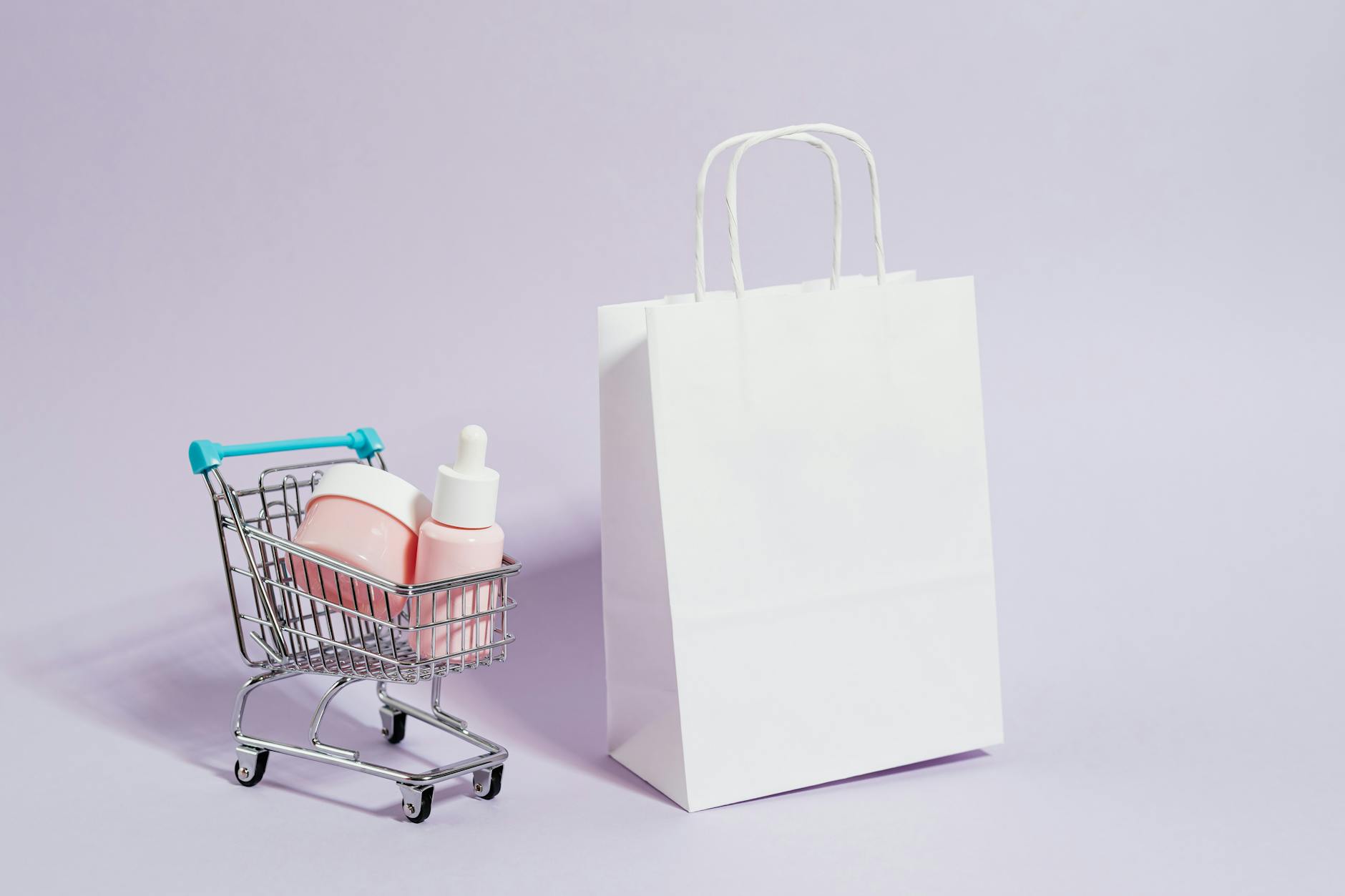
A customer buys a 30-day supply of protein powder. Day 28 comes around and the tub is almost empty. They open their phone, search for the brand, maybe compare prices, get distracted, forget, and end up buying from whoever shows up in their Instagram feed that evening.
That customer was ready to reorder. You just didn’t remind them.
Replenishment flows fix this. They’re automated emails triggered at precisely the right time — when a customer is likely running low on a consumable product. And they’re absurdly effective. Replenishment emails generate 2-4x the revenue per recipient of standard promotional campaigns because the timing and relevance are perfect.
Yet fewer than 20% of e-commerce brands running Klaviyo have a replenishment flow active. If you sell anything consumable, refillable, or replaceable, this is one of the highest-ROI automations you can build.
Key Takeaways
- Replenishment flows convert at 8-15%, compared to 1-3% for standard campaigns
- The key is timing — send 3-5 days before the product runs out, not after
- Use Klaviyo’s Placed Order trigger with time delays matched to product consumption cycles
- Multi-product replenishment flows need conditional splits to handle different product timelines
- Subscription/auto-ship conversion should be a secondary CTA in every replenishment email
- Adding SMS to replenishment flows increases reorder rates by 20-30%
Why Replenishment Flows Are a Revenue Machine
The economics are straightforward. Acquiring a new customer costs 5-7x more than retaining an existing one. But retention only works if customers actually come back. Replenishment flows remove the friction from repeat purchases by:
- Reminding at the right moment. Not too early (they’ll ignore it), not too late (they’ve already bought elsewhere).
- Making reordering effortless. One click to the exact product they previously bought, pre-loaded in the cart.
- Building habitual purchasing behavior. After 2-3 prompted reorders, many customers start reordering unprompted — or convert to subscription.
The numbers across our client base tell the story:
- Revenue per recipient: $4.50-$8.00 (vs. $0.08-$0.15 for campaigns)
- Click rate: 6-12% (vs. 1.5-2.5% for campaigns)
- Conversion rate: 8-15% (vs. 1-3% for campaigns)
- Contribution to total email revenue: 15-35% for brands with consumable products
These aren’t cherry-picked outliers. These are median figures across dozens of consumable product brands we manage on Klaviyo.
Which Products Need Replenishment Flows
Not every product qualifies. Replenishment flows work best for products with:
Predictable consumption cycles:
- Skincare and beauty (cleanser, moisturizer, serums — 30-60 day supply)
- Supplements and vitamins (30-90 day bottles)
- Pet food and treats (14-45 days depending on size)
- Coffee and tea (14-30 days)
- Cleaning supplies (30-60 days)
- Health and wellness (protein powder, collagen, etc.)
- Baby products (diapers, formula, wipes)
Semi-predictable replacement cycles:
- Razors and grooming products (30-60 days)
- Toothbrush heads (90 days)
- Water filters (60-90 days)
- Contact lenses (30-90 days)
Seasonal replacement:
- Sunscreen (every summer)
- Allergy supplements (spring)
- Holiday-specific products (annual)
If your product doesn’t have a natural consumption or replacement cycle, a replenishment flow isn’t the right automation. Look at post-purchase cross-sell flows instead.
Setting Up the Flow in Klaviyo
Step 1: Map Your Product Consumption Timelines
Before touching Klaviyo, you need to know how long each product lasts. Methods to determine this:
- Product specs. If you sell a “30-day supply,” the cycle is obvious.
- Customer survey data. Ask your best customers how often they reorder.
- Purchase frequency analysis. In Klaviyo, look at the average time between first and second purchases for each product. This is your empirical consumption cycle.
- Industry averages. Use these as a starting point, then refine with your own data.
Create a spreadsheet mapping every replenishment-eligible product (or product category) to its average consumption cycle. Example:
| Product/Category | Avg. Consumption Cycle | Replenishment Email Timing |
|---|---|---|
| Daily moisturizer (50ml) | 45 days | Day 38 |
| Vitamin D supplements (60ct) | 60 days | Day 52 |
| Dog food (15lb bag) | 30 days | Day 24 |
| Coffee beans (12oz) | 14 days | Day 10 |
| Protein powder (2lb) | 30 days | Day 24 |
The replenishment email should arrive 5-7 days before the product runs out. Early enough that they can order and receive it in time, but late enough that they actually need it.
Step 2: Create the Flow Trigger
In Klaviyo, go to Flows > Create Flow > Create from Scratch.
Trigger: Placed Order
Trigger Filters:
- “Item Product Name” or “Item Collections” contains your replenishment-eligible products
- “Is first order: No” can be used if you want to exclude first-time buyers (they’ll be in your post-purchase flow instead)
Step 3: Add Time Delays and Conditional Splits
This is where it gets product-specific.
For single-product brands (or simple catalogs):
Set a single time delay matching your consumption cycle minus 5-7 days. If your product lasts 30 days, set a 24-day delay.
For multi-product brands:
Use Klaviyo’s Conditional Splits to branch the flow based on what was purchased:
Trigger: Placed Order
  → Conditional Split: "Items contain [Skincare Category]"
      → YES: Wait 38 days → Replenishment Email (Skincare)
      → NO: Conditional Split: "Items contain [Supplements Category]"
          → YES: Wait 52 days → Replenishment Email (Supplements)
          → NO: Exit flow (non-replenishable product)
For brands with 10+ replenishment categories, this branching gets complex. Consider creating separate flows for each major product category to keep things manageable.
Step 4: Add Flow Filters
Essential filters to prevent misfires:
- Has Placed Order at least once since [flow entry date] — If they already reordered before your email triggers, skip it. This is the most important filter.
- Is not suppressed — Standard Klaviyo filter.
- Has been active on the site in the last 90 days — Don’t email completely disengaged profiles.
In Klaviyo, apply these as flow filters (not trigger filters) so they’re evaluated at the time the email is about to send, not at flow entry.
Writing High-Converting Replenishment Emails
Email 1: The Friendly Reminder (Primary Timing)
This is your main replenishment email. Send it 5-7 days before the product runs out.
Subject line formulas that work:
- “Running low on [Product Name]?”
- “Time to restock your [Product Name]”
- “[First Name], your [Product] is almost out”
- “Your [Product] refill is ready”
Email structure:
- Opening line: Acknowledge they’re probably running low. “It’s been about [X] weeks since your last order of [Product] — you’re probably getting close to the bottom.”
- Product block: Show the exact product they purchased with current price. Use Klaviyo’s dynamic product blocks pulling from the order event data.
- One-click reorder CTA: “Reorder Now” button linking directly to a cart with their product pre-loaded. Shopify’s cart permalink functionality makes this possible:
yourstore.com/cart/VARIANT_ID:1 - Subscription pitch (secondary CTA): “Never run out again — subscribe and save 15%” as a smaller secondary call-to-action below the main CTA.
- Social proof: A short customer review of the product, or a “Join 10,000+ customers who reorder monthly.”
Email 2: The Urgency Follow-Up (7 Days After Email 1)
Only send to people who didn’t reorder from Email 1.
Subject lines:
- “Don’t go without your [Product]”
- “Your [Product Name] has probably run out by now”
- “Still need to restock?”
Email structure:
- Slightly stronger urgency — they’re now at or past the point of running out
- Same product block with one-click reorder
- Consider adding a small incentive: free shipping, 10% off, or a bonus sample
- Subscription pitch becomes more prominent
Email 3: Last Chance + Incentive (5 Days After Email 2)
This is your final replenishment email. If they haven’t reordered by now, they’re either disengaged, found an alternative, or need a stronger nudge.
Subject lines:
- “We don’t want you to run out — 15% off your reorder”
- “A little something to make reordering easier”
Email structure:
- Acknowledge it’s been a while
- Offer a meaningful discount (10-15% off their reorder)
- Time-limit the offer (48-72 hours)
- Include the subscription save CTA as a “best deal” option
SMS Integration
Add an SMS message between Email 1 and Email 2 for subscribers who’ve opted into SMS:
“Hey [First Name]! Your [Product Name] is probably running low. Reorder in one tap: [link]”
SMS replenishment messages convert at 8-12% — often higher than the emails themselves because of the immediacy and direct-to-phone delivery. Use Klaviyo’s channel-specific conditional splits to only send SMS to SMS-consented profiles.
Optimizing Your Replenishment Flow
Refine Your Timing with Data
After running your flow for 60-90 days, pull the data:
- Go to Klaviyo Analytics > Flows > [Your Replenishment Flow]
- Look at click and conversion rates for each email
- If Email 1 has low engagement but Email 2 converts well, your timing is too early — push the initial delay back by 3-5 days
- If Email 1 converts extremely well (15%+), consider sending it 2-3 days earlier
You can also use Klaviyo’s Predictive Analytics features. The “Expected Date of Next Order” metric uses machine learning to predict when each individual customer is likely to buy again. Use this as a trigger instead of fixed time delays for more sophisticated timing.
Segment by Purchase Frequency
Not all customers consume products at the same rate. A household with three dogs goes through food faster than a household with one.
Create segments based on historical purchase frequency:
- Fast consumers: Reorder cycle is 20% shorter than average
- Average consumers: Reorder within the standard window
- Slow consumers: Reorder cycle is 20% longer than average
Adjust your flow timing for each segment. This level of personalization increases replenishment flow conversion by 15-25%.
Test the Incentive Ladder
Not everyone needs a discount to reorder. Test these approaches:
Version A (No Discount):
- Email 1: Reminder only
- Email 2: Reminder + free shipping
- Email 3: Reminder + 10% off
Version B (Subscription Push):
- Email 1: Reminder + “Subscribe and save 15%”
- Email 2: Reminder + subscription benefits breakdown
- Email 3: One-time 10% off OR subscribe and save 15%
Version C (Value-Add):
- Email 1: Reminder + educational content about the product
- Email 2: Reminder + customer review highlighting results
- Email 3: Reminder + bundle offer (reorder + try a complementary product)
In our testing, Version A typically has the best margin performance, while Version B drives the most subscription conversions. Version C works well for premium/luxury consumables where education reinforces the value proposition.
Measuring Success
Primary KPIs
- Replenishment flow conversion rate: Target 10-15%. Below 8% means timing or messaging needs work.
- Revenue per recipient: Target $4-$8. This should be your highest-RPR flow after abandoned cart.
- Subscription conversion rate from flow: Track what percentage of replenishment recipients convert to auto-ship. Target 5-10%.
Secondary KPIs
- Time between purchases (trending): Is your replenishment flow shortening the gap between orders? Track this monthly.
- Customer LTV at 6 and 12 months: Customers in the replenishment flow should have 40-60% higher LTV than those who aren’t.
- Churn rate: Are fewer customers lapsing since implementing the flow? Measure the percentage of one-time buyers who become two-time buyers.
Attribution Considerations
Klaviyo’s default attribution window is 5 days for email opens and clicks. For replenishment flows, this might undercount revenue because a customer might click on Tuesday but not purchase until Friday (when they actually run out). Consider extending the attribution window to 7 days for replenishment flows to capture the full picture.
Common Mistakes
-
Sending too early. A replenishment email that arrives when someone still has half a bottle left gets ignored. Time it to arrive when they’re at 10-15% remaining.
-
Generic product recommendations. Show them the exact product they bought, not your bestsellers. Replenishment is about convenience, not discovery.
-
Leading with discounts. Email 1 should never include a discount. Many customers would reorder at full price — you’re just reminding them. Save discounts for Email 3 to catch the fence-sitters.
-
Ignoring subscription conversion. Every replenishment email is a subscription sales opportunity. If you sell consumables and don’t offer auto-ship, start now. Subscription customers have 2-3x higher LTV than one-time replenishment buyers.
-
One-size-fits-all timing. A customer who orders a 60-count bottle of vitamins shouldn’t get the same replenishment timing as someone who orders a 30-count. Use product variant data in your conditional splits to adjust timing.
-
Forgetting to suppress recent purchasers. This is the most embarrassing mistake. Someone reorders on day 20, and your system sends a “running low?” email on day 24. Use flow filters that check for recent purchases at the time of email send.
The Bottom Line
Replenishment flows are the closest thing to guaranteed revenue in email marketing. You know what the customer bought, you know when it runs out, and you have a direct line to remind them. The only question is whether you’ve built the automation.
For brands with consumable products, this single flow can generate 15-35% of total email revenue. That’s revenue that would otherwise leak to competitors, Amazon, or simple forgetfulness.
Build it once. Optimize it quarterly. Let it run.
Want us to set this up for your store? Get a Free Audit
More in Strategy
- Best Email Marketing Agencies for Small DTC Brands ($40k+/mo)
- Best Email & SMS Marketing Agencies for Ecommerce (2026)
- Chronos Agency Alternatives for $40k–$500k/mo DTC Brands
- Chronos Agency Pricing Explained: Is the $10k Minimum Worth It?
- Chronos Agency vs InboxArmy: Which Is Better for DTC Email?